Visual Synthesis and DiffusionImage generation relies on [Diffusion Models], which operate differently from text models. These systems learn by taking an image, adding progressive noise until it is unrecognizable, and then learning the reverse process: reconstructing the original image from noise. When you provide a prompt, you are guiding the model through this reconstruction phase. The key parameter to master is the [Sampling Method], which dictates how the model iterates through the noise-removal process. A lower number of steps might lead to unfinished imagery, while an excessively high number increases compute time without necessarily improving quality. Learn the foundational theory at Stability AI's documentation. You should also understand [Negative Prompting], a technique where you explicitly list features you do not want to see, such as 'distorted hands' or 'blurry background.' This significantly improves compositional control. For high-level image standards, refer to W3C guidelines on accessible image descriptions. Use these tools for prototyping assets, storyboarding, or creating conceptual layouts for UI/UX design. FAQsWhy do these models struggle with text in images?Diffusion models understand shapes and pixel densities but do not have an internal representation of characters, which leads to incoherent spelling. What is a seed in image generation?A seed is a numerical value that initializes the random noise used for a generation; using the same seed and prompt produces the same image. Can I generate copyrighted material?Most platforms have safety filters to prevent generating trademarked characters or faces of real people, though rules vary by model provider.
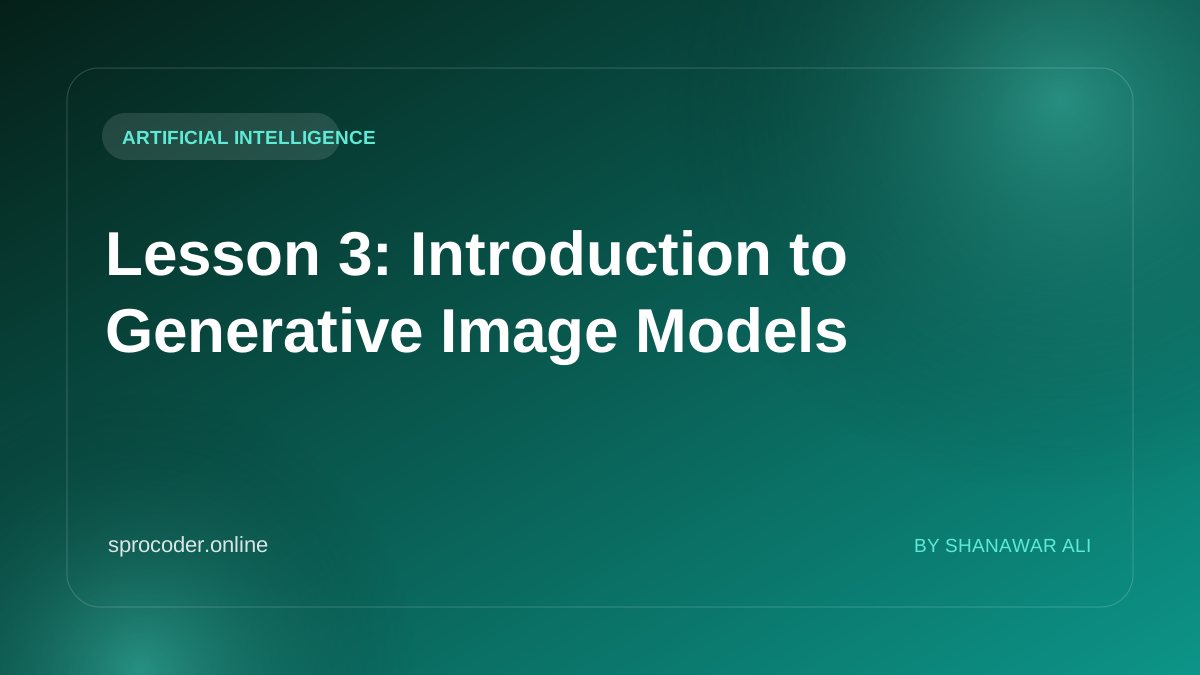
Lesson 3: Introduction to Generative Image Models
“Exploring Diffusion Models and visual synthesis.”